

ONE LIGHT: How to Create More With a Single Light
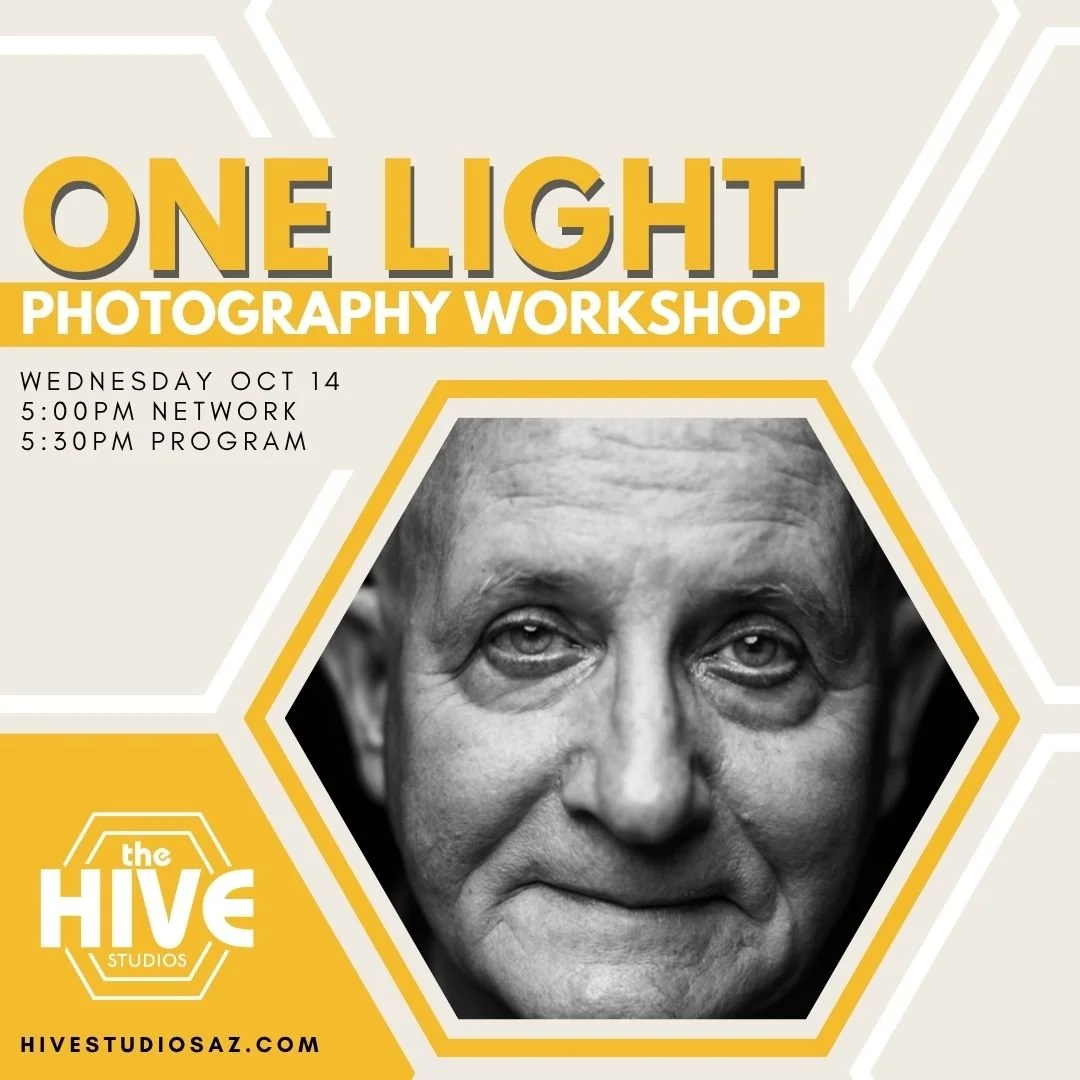
One light. Endless possibilities.
There’s a tendency in photography to believe that better lighting requires more lighting.
Another light. Another modifier. Another stand. Another piece of gear.
But adding more equipment doesn’t necessarily make you a better photographer. Understanding the light you already have does.
That’s the idea behind ONE LIGHT, a photography workshop with James Patrick at The Hive Studios in Phoenix on Wednesday, October 14.
The entire workshop is dedicated to what you can accomplish with a single light source.
One Light Can Do A Lot
A single light can create soft, clean portraits.
It can create dramatic shadows.
It can separate a subject from the background, create shape and dimension, or completely change the mood of an image.
The difference isn't necessarily the light itself. It's what you do with it.
Move the light closer.
Move it farther away.
Raise it.
Lower it.
Change its direction.
Change the modifier.
Change your subject's position.
Change your camera position.
Even small adjustments can produce dramatically different results.
Learn to See the Light
Good lighting isn't about memorizing a collection of lighting diagrams.
It's about understanding what is happening in front of your camera.
Where are the shadows falling?
How quickly is the light falling off?
What is the quality of the light?
How is the environment affecting the subject?
What happens when you move the light six inches?
What happens when you move the subject instead?
Once you understand those relationships, you can recreate the look you want instead of simply trying to remember how someone else built it.
The Environment Is Part of the Lighting
Your light doesn't exist in isolation.
Walls, floors, ceilings, windows, backgrounds and even the space around your subject can all affect the final image.
Sometimes the best way to change the photograph isn't to add another light. It's to change where you put the light you already have.
That's one of the most useful skills a photographer can develop: learning to see the entire environment as part of the lighting setup.
More Gear Isn't Always the Answer
There's nothing wrong with having multiple lights. There are plenty of situations where additional lights are exactly what you need.
But if you can't create the image you want with one light, adding three more probably won't solve the underlying problem.
Understanding one light forces you to pay attention.
It teaches you how light behaves.
And once you understand that, adding additional lights becomes much more intentional.
You're no longer adding lights because you think you need more light. You're adding them because you know exactly what you want another light to accomplish.
ONE LIGHT at The Hive Studios
On Wednesday, October 14, James Patrick will break down the principles of one-light photography at The Hive Studios in Phoenix.
We'll explore how positioning, distance, direction, modifiers, exposure and the environment can completely transform an image without adding more lights.
Whether you're relatively new to lighting or you've been photographing for years, the goal is the same:
Stop thinking about how many lights you have. Start thinking about what you can do with the one you have.
ONE LIGHT
A Photography Workshop with James Patrick
Wednesday, October 14
The Hive Studios | Phoenix, Arizona
One light. Less gear. More control.